
Shedding Texels
Shedding Texels: Could This Be the Future?
Finding a shearer isn't getting any easier. Shearing costs aren’t going down, and wool doesn't bring much money. If you only own a few Texel rams, it can be especially hard to find someone willing to come shear them.
That has me wondering...
What if some Texels could naturally shed much of their wool?
I'm not an expert on shedding Texels, but I've been seeing something interesting in my own flock, and I'd love to hear what other breeders think. Last Sunday I posted a Facebook video of one of my Purebred Texel ewe lambs, #437. She has shed about 90% of her fleece already this summer.
She sheds just like her sire, James Monroe (Portland Prairie), whose pedigree is 15/16 UK genetics.
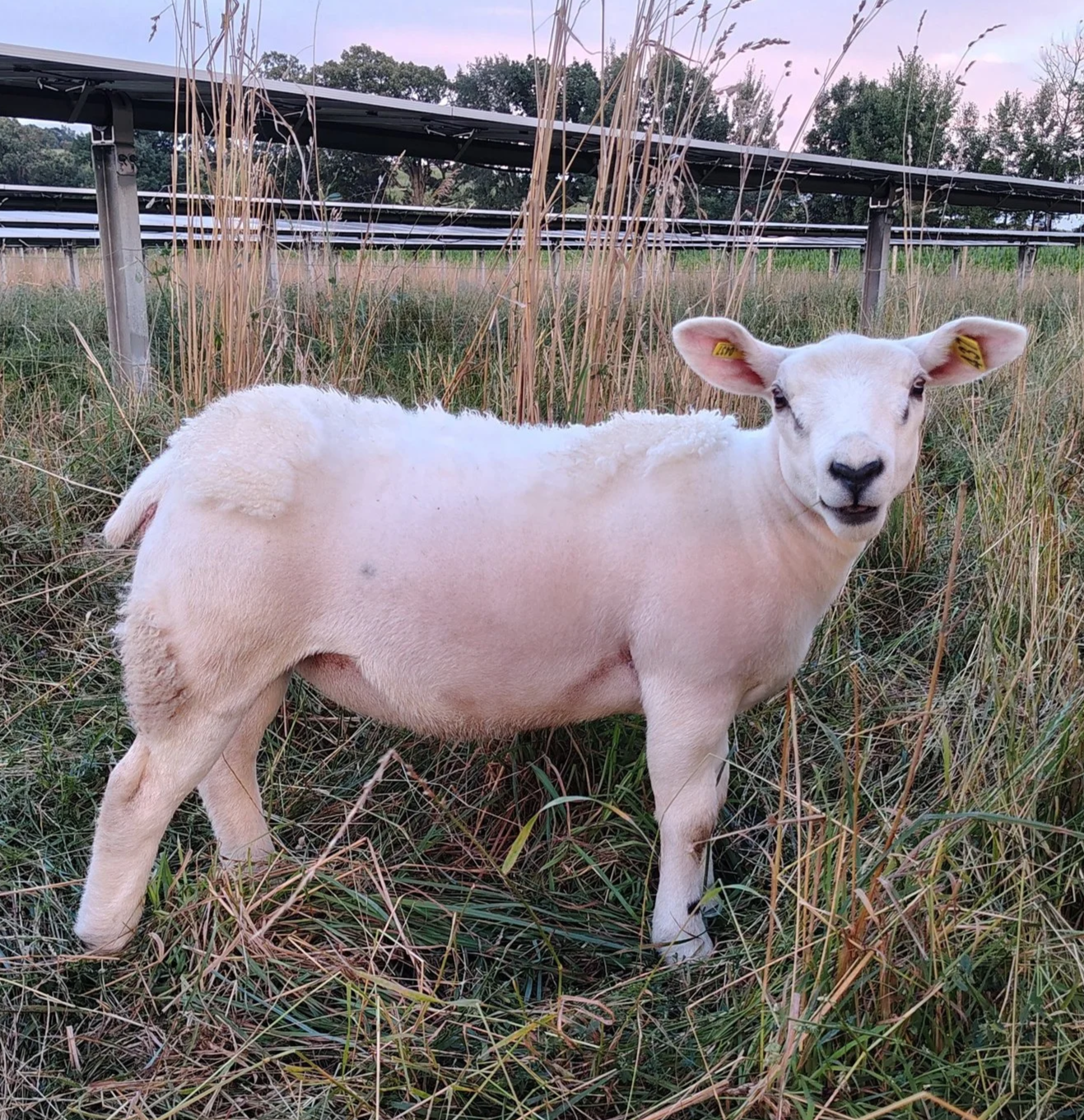
#437 at 4 Months old; end of July 2026
Besides the shedding, she's a really impressive lamb. She has tremendous leg muscle (thanks to both her sire and dam), has gained 0.7 pounds per day since birth, and already weighs 94 pounds at just under 4 months old while eating grass in the the solar site.
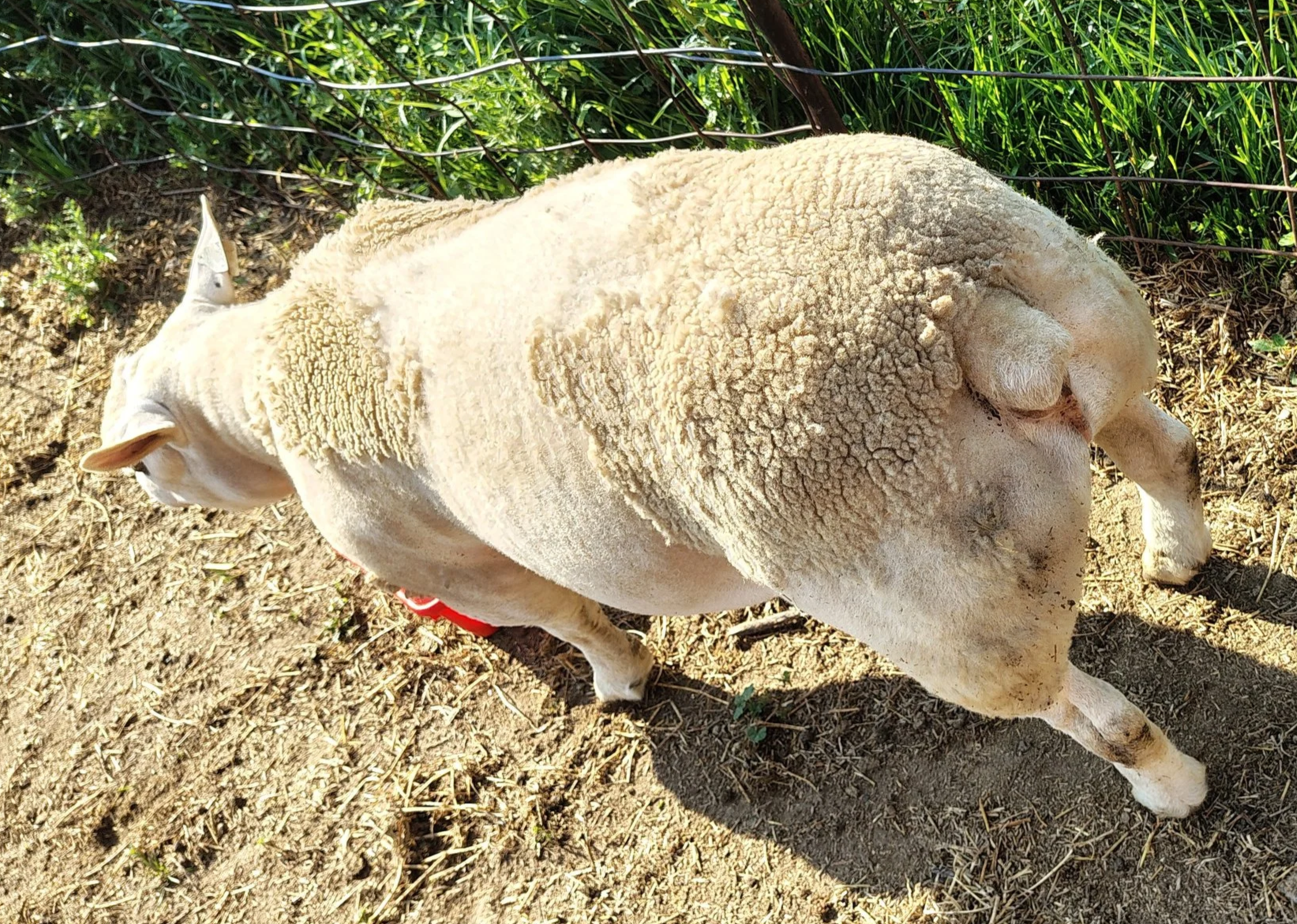
Her sire-James Monroe August 6, 2026
I have used four rams from the Caereinion Diamond line, and that's where I'm seeing a lot of this shedding-James Monroe, Thomas Jefferson and his sons #288 Teddy Roosevelt and #322.
One thing I've noticed is that shedding Texels differ from shedding Katahdins.
The wool that's left behind isn't hair like. Katahdins have more of a goat-hair look after they shed. These Texels still have wool left on them.
During the summer shedding Texels lose much of their fleece, but then they grow wool back for winter. The winter wool is shorter, so they often appear smaller than my other Texels even though they're just as thick and muscular. Which is why you should feel the leg muscle when selecting Texels because the wool can be deceiving.
The wool on their rear ends even look different—almost heart shaped. This is not the greatest pic.
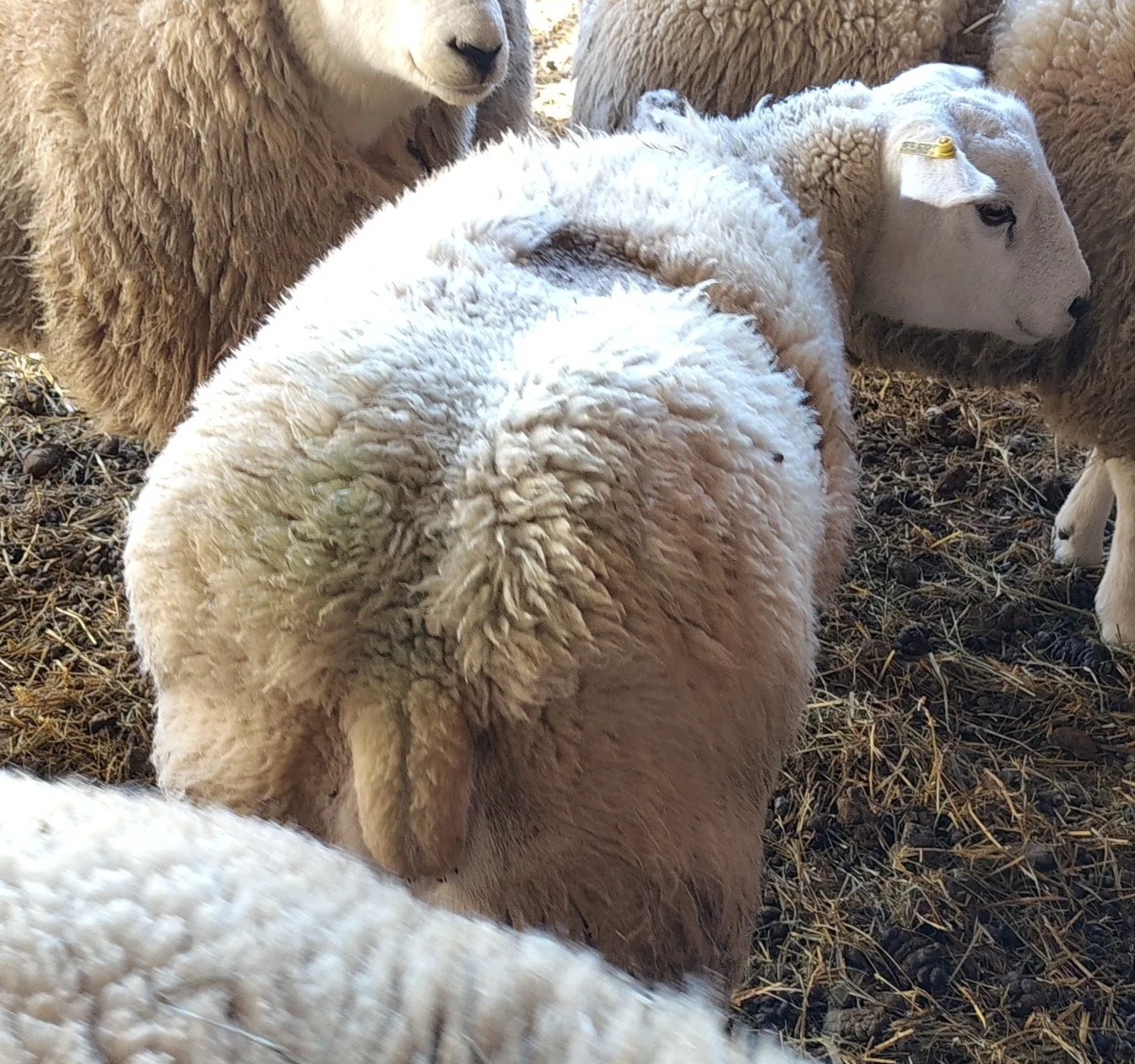
#315 in winter. The shorter wool in the middle of her right side is from being sheared to ultra sound her loin eye.
Ewe #315 is one of my heavier yearling ewe shedders.
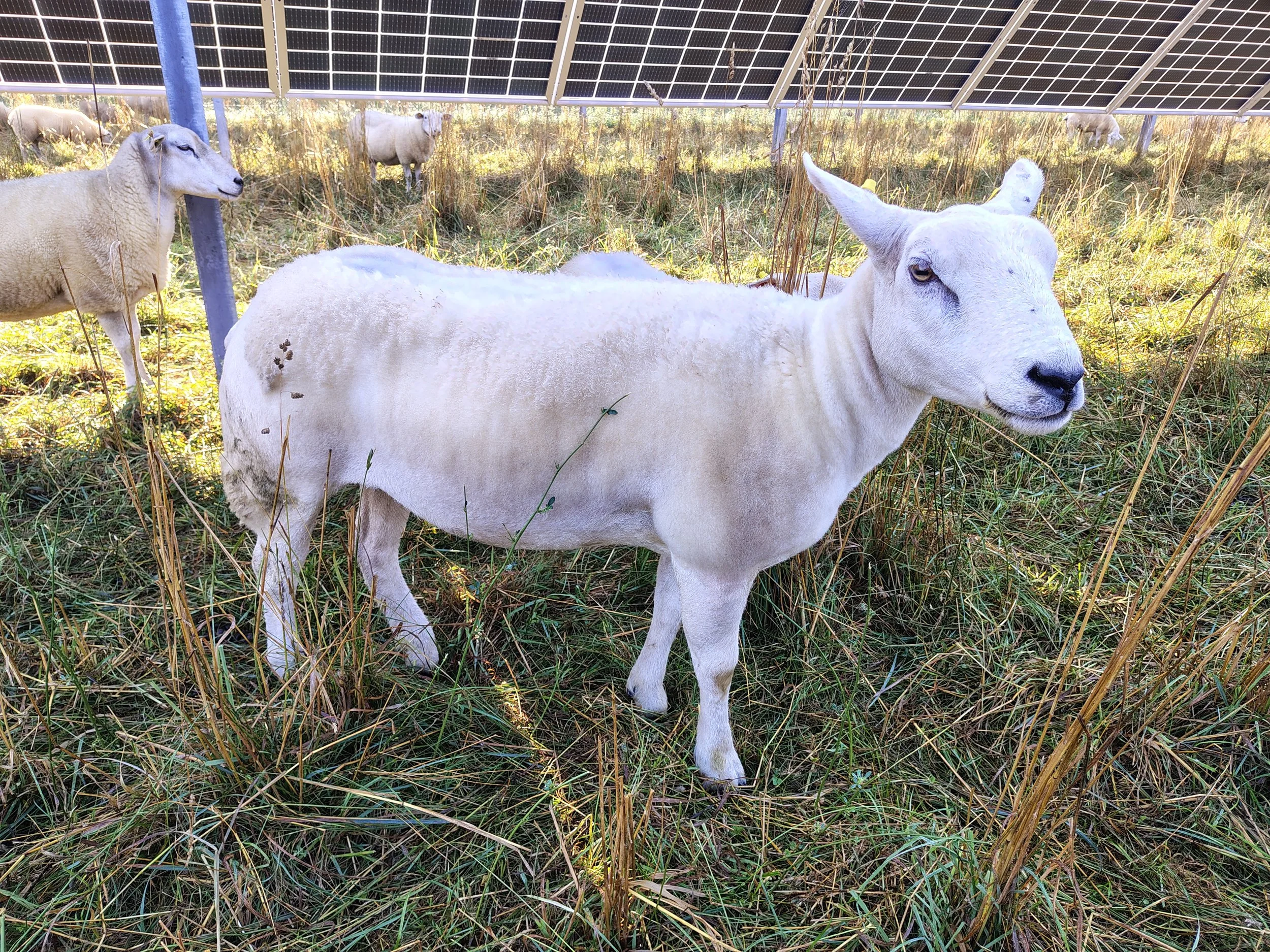
#315 August 6, 2026
I'm seeing more and more of my Purebred Registered Texels shed to some degree.
There are parts of that I absolutely love. I love having no wool on the belly. My butcher shop loves it. My shearer loves it. And I definitely love it when I'm shearing. I'm not a great shearer, but I think I could shear ewe #437 in about two minutes without even having to flip her over!
One group that immediately comes to mind is Katahdin breeders. Many already use Texel rams because they love the muscling and carcass quality Texels add to their lambs. I know some already really like these shedding Texels.
Who wants to find a shearer for one or two Texel rams when the rest of the flock is hair sheep? And honestly, what is wool worth today? Don't get me wrong. I still believe the carcass value of Texels is absolutely worth the cost of shearing. Their muscling and meat quality are worth every penny. But I can also see real advantages to Texels that naturally shed more of their fleece for certain shepherds.
Some people have asked me, "Shedding? What do you mean? Are your sheep sick?" That was actually my first thought too. But after watching it over a few years, I'm seeing a genetic pattern in where it's showing up-they are not sick.
Here's what I've observed. The lambs usually start shedding from the belly upward and their chest is also often one of the first places to shed. The topline and back are usually the last places to shed, if they shed at all. When the wool comes off, it doesn't leave a bare, pink-skinned sheep. There is still a layer of shorter wool underneath. Many of my Texels also shed around the tail and dock area, which I think is a real advantage for reducing fly strike. I've noticed similar shedding patterns in some UK Texels as well.
In New Zealand they favor “Bareness’” as they call it and give points on their genetic evaluation database for bare belly and bare breech (dock area as I mentioned earlier) they call them “ethically improved sheep” and use this bareness as a tool to manage fly strict. I recenty atttend an NSIP educaiton day where I heard Dr. Tricia Johnson from New Zealand speak on their sheep improvement program. Texels are heavily used in New Zealand as Terminal Sires.
Another interesting thing I've seen is that some sheep don't shed much as lambs, but do shed as yearlings. I honestly don't know why that happens, but I've seen it more than once.
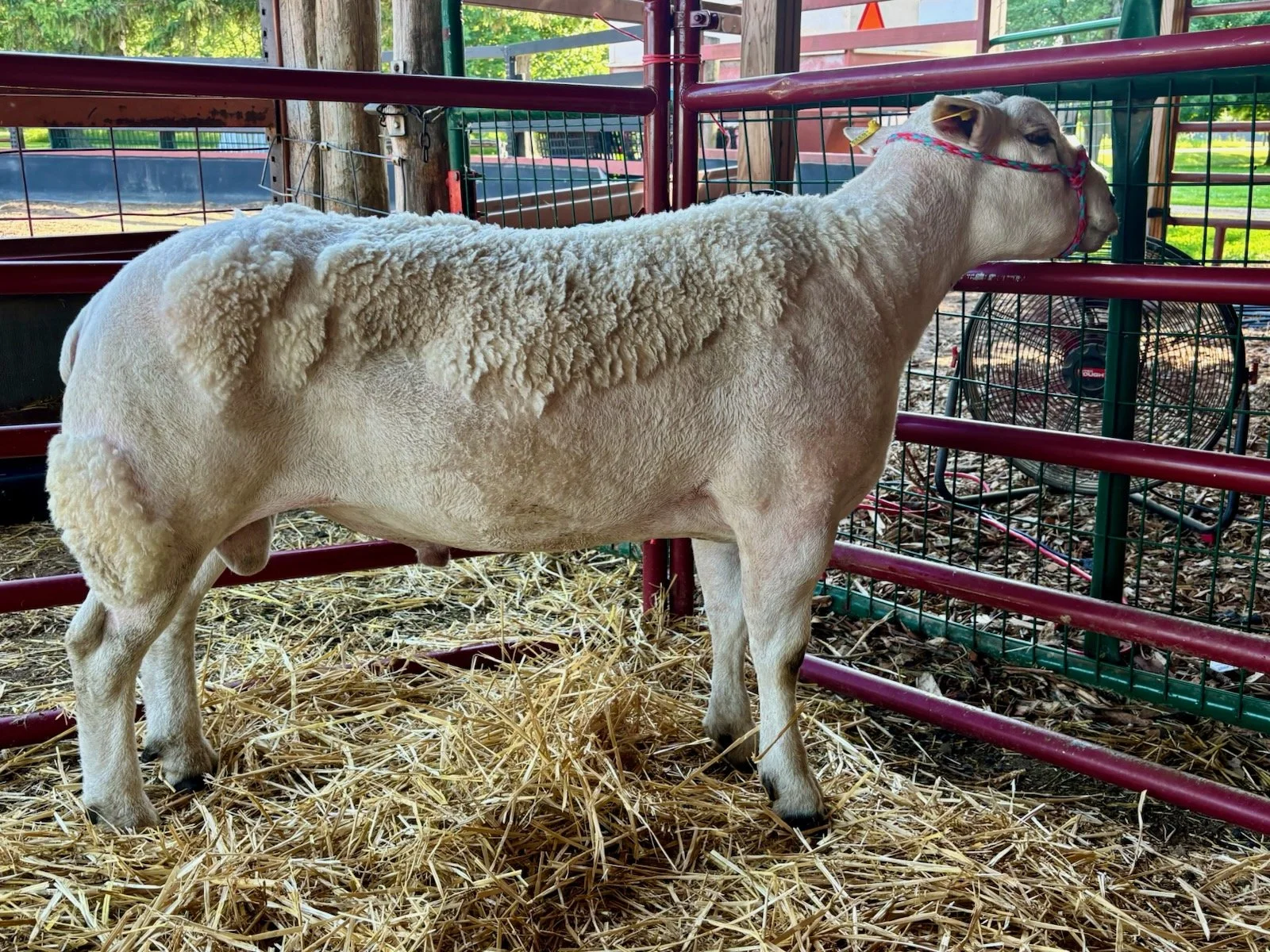
This is Halbur’s Heavenly Hill #322 in early June of 2026, whom I sold last fall after using on a few ewes here, he sheds a ton!
I'd love to hear from other breeders.
If you'd like to watch the video or join the discussion, here's the Facebook post:
https://www.facebook.com/share/r/1HgNqBaK3Y/
What do you see as the biggest advantages of shedding Texels?
What concerns would you have?
Do you think this is something worth selecting for in certain flocks, or do you think traditional wool coverage is still the better direction?
I'm looking forward to hearing your thoughts.
Your Texel Farmer,
Olivia
